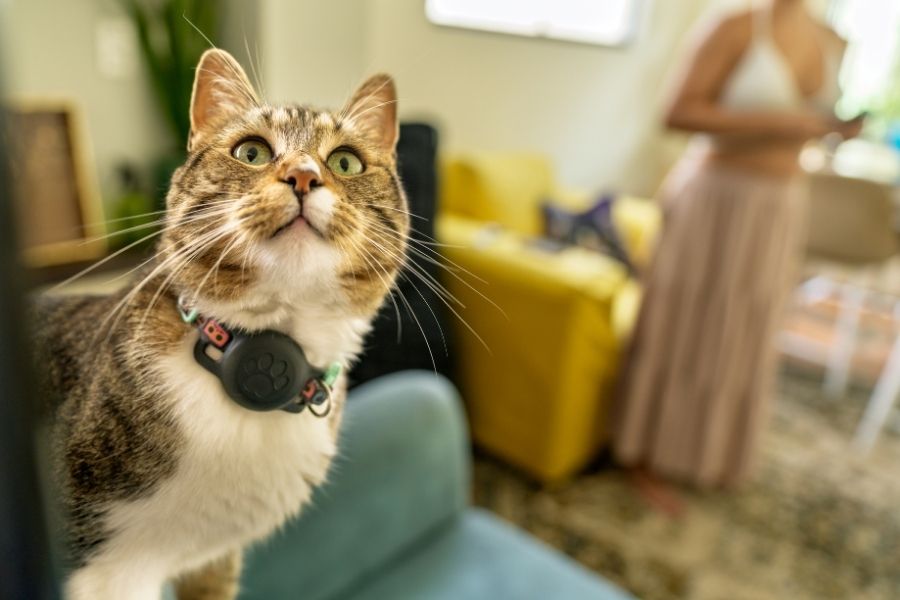
Every year, millions of pets go missing and never find their way home. A collar tag can fall off. A fence can have a gap. A door can open at the wrong moment. These situations happen to careful, loving pet owners all the time. A pet microchipping service gives your dog or cat a permanent, tamper-proof form of identification that stays with them for life. It takes less than a minute to place and requires no batteries, no charging, and no upkeep. If your pet ever ends up at a shelter or veterinary office, a quick scan is all it takes to reunite you. This article covers how microchips work, why they matter, and what to expect when you bring your pet in for the procedure.
How Does Pet Microchipping Work?
A microchip is a tiny device, roughly the size of a grain of rice, implanted just beneath your pet’s skin. It contains a unique identification number that links to your contact information in a national pet registry.
When a lost pet is brought to a shelter or veterinary clinic, staff use a handheld scanner to read the chip. The scanner picks up the ID number without any physical contact. That number is then searched in a pet recovery database to locate the registered owner.
The chip itself uses passive RFID technology. It has no power source and no moving parts. It only activates when a compatible scanner passes over it. This is how microchipping works in a simple, reliable, maintenance-free way.
Signs Your Pet Is Overdue for Permanent ID
Many pet owners assume their animals are protected because they wear a collar. Collars are helpful, but they are not enough on their own. Here are clear signs your pet needs a microchip:
- No current ID tag: Tags wear down, fade, or get lost. Without one, a finder has no way to reach you.
- Your pet has escaped before: One escape is a warning. A history of escaping means the risk is real and ongoing.
- You recently adopted or rescued: Shelter pets often arrive without verified identification. Confirm their chip status right away.
- You travel with your pet: Cross-state or cross-country travel increases the chance of a lost pet in an unfamiliar area.
- Your pet spends time outdoors unsupervised: Cats especially roam and can end up far from home without warning.
In our experience, pet owners who come to us after a lost-pet scare almost always ask about microchipping the same day. Do not wait for a scare to take action.
What to Expect During the Microchipping Appointment
The procedure is fast and straightforward. Here is what happens step by step:
- Check-in and record review: Your vet confirms your pet’s age, weight, and health status before placing the chip.
- Site preparation: The chip is typically placed between the shoulder blades. No shaving or anesthetic is needed.
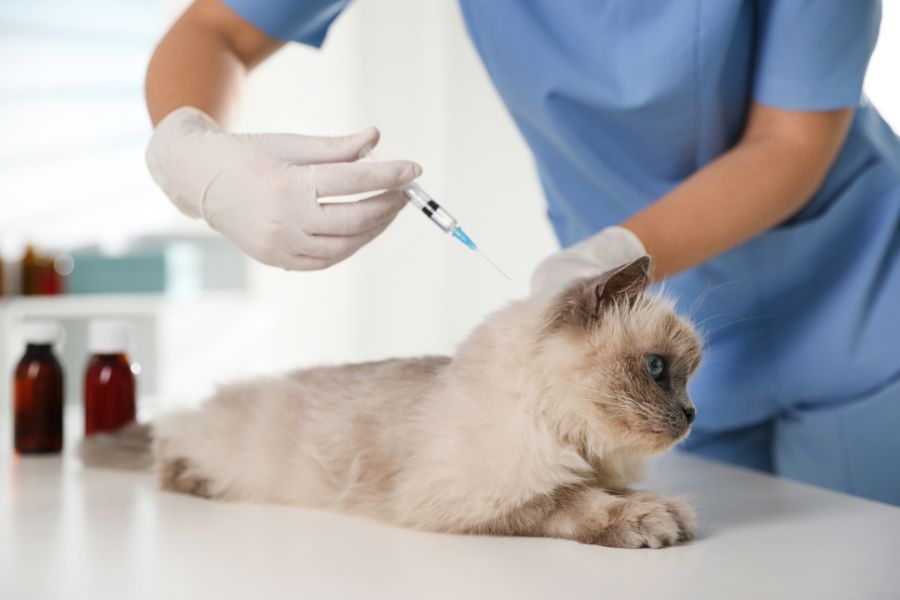
- Chip placement: The microchip is loaded into a sterile needle and injected under the skin in a single motion. Most pets react no more than they would to a routine vaccine.
- Scanner confirmation: The vet scans the site immediately to confirm the chip is reading correctly.
- Registry enrollment: You register your contact information with a national pet recovery database before you leave. This step is critical. A chip without registered owner information cannot help reunite you with your pet.
Pet owners in Prairie Village, Kansas often tell us they were surprised by how quick the whole visit was. The appointment itself rarely takes more than 15 minutes.
Why Pet ID Chip Benefits Outlast Any Other Form of ID
One of the most common questions we get from pet owners is whether a microchip is truly better than a tag. The short answer is yes, and here is why.
Tags, GPS collars, and bandanas all share the same weakness: they can come off. A microchip cannot. It moves with your pet through every adventure, escape, and shelter intake.
Estimates suggest that microchipped dogs are returned to their owners at significantly higher rates than dogs without chips. For cats, the difference is even more dramatic, since cats are less likely to wear collars consistently.
We frequently remind our clients that pet ID chip benefits are permanent from day one. You pay once and the chip lasts for your pet’s lifetime. There are no subscription fees, no charging, and no app required.
A common misconception is that any scanner can read any chip. In Kansas, most veterinary clinics and shelters use universal scanners that read all standard chip frequencies. If you adopted a pet from another state or country, ask your vet to confirm the chip is compatible with local scanners.
At Mission Road Animal Clinic, we verify chip compatibility at every wellness visit so you never have to wonder.
How to Make Sure Your Microchip Actually Works for You
Getting the chip placed is only half of the process. The other half is keeping your registry information current.
Follow these steps to make sure your pet’s microchip can do its job:
- Register with a national database immediately after placement. Popular options include HomeAgain, AKC Reunite, and Found Animals Registry.
- Update your phone number, address, and emergency contact any time your information changes.
- Ask your vet to scan the chip at every annual wellness visit to confirm it is still reading correctly.
- If you rehome a pet, update the registry to reflect the new owner.
- Keep a photo of your chip number stored in your phone. This helps if you ever need to report a lost pet quickly.
Microchip your pet today and then treat registry maintenance the same way you treat annual vaccines: put it on your calendar and do not skip it. A chip with outdated owner information is a chip that cannot bring your pet home.
Lost pet recovery tips work best when combined with a registered, functional microchip. No single tool is foolproof, but a microchip is the closest thing to a guarantee available for pet identification.
Conclusion
A microchip is one of the most permanent, low-effort things you can do for your pet’s safety. The procedure is fast, the chip lasts a lifetime, and the peace of mind it provides is immediate. A pet microchipping service paired with an up-to-date registry gives your dog or cat the best possible chance of coming home if they ever go missing. Review your pet’s chip status at your next wellness visit. If your pet is not yet chipped, now is the right time to act. The team at Mission Road Animal Clinic is ready to help you take this simple, important step for your pet’s safety. Book an appointment today.
Frequently Asked Questions
Q: How does a pet microchip work?
Ans: A microchip is a small RFID device implanted under your pet’s skin. It stores a unique ID number that can be read by a scanner at any veterinary clinic or shelter. That number is linked to your contact information in a pet recovery database.
Q: Does microchipping a dog or cat hurt?
Ans: Most pets experience minimal discomfort. The chip is inserted with a needle, similar to a routine injection. No anesthesia is needed, and the procedure takes only a few seconds.
Q: What happens if my pet is found without a collar?
Ans: Any shelter or veterinary clinic that finds your pet can scan for a microchip. If the chip is registered to you, they can contact you directly to arrange a reunion.
Q: Do I need to do anything after my pet is microchipped?
Ans: Yes. You must register your contact information with a national pet recovery database. Keep that information current any time your address or phone number changes.
Q: Can a microchip track my pet’s location in real time?
Ans: No. A standard microchip is not a GPS device and does not track location. It only transmits an ID number when scanned directly. For real-time tracking, a separate GPS collar is needed in addition to the microchip.