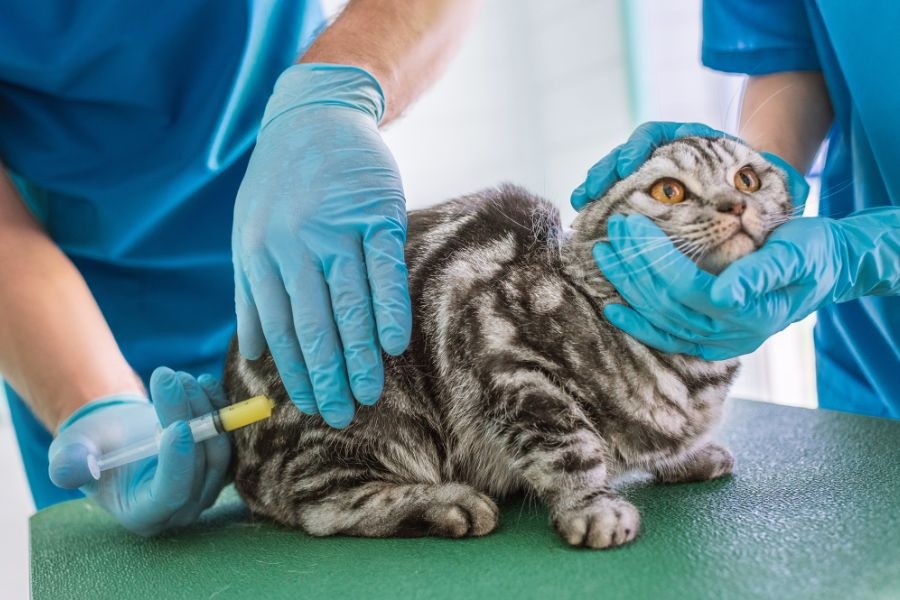


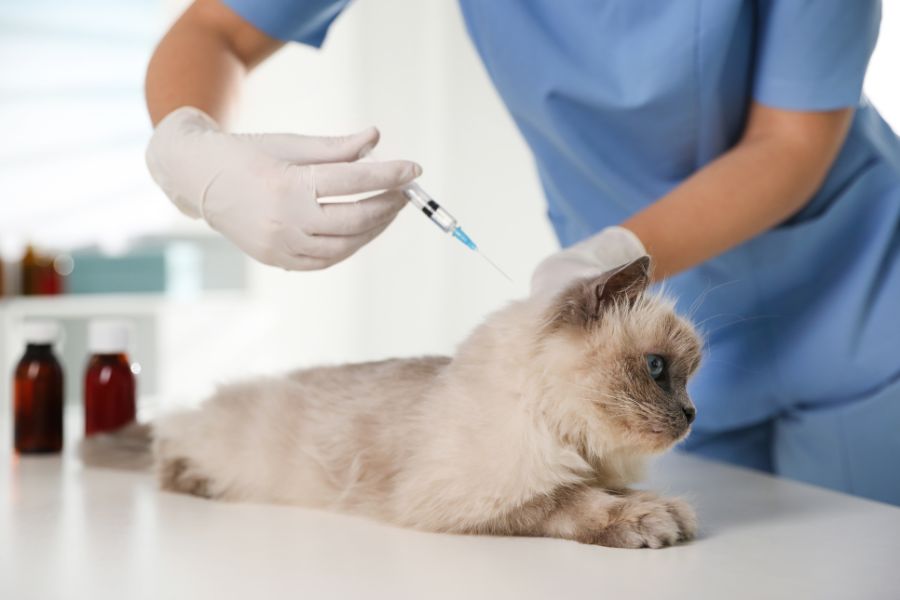
The cat rabies vaccine is one of the most important protections you can give your feline companion. Rabies is a deadly virus that can affect cats, people, and other animals, and once symptoms appear, it is almost always fatal. In this guide, we’ll explain how the rabies vaccine works, when cats need it, and side effects to watch for.
What Is Rabies and Why Is It Dangerous for Cats?
Rabies is a viral disease that attacks the nervous system of mammals. It spreads through saliva, most commonly from bites by infected animals such as raccoons, skunks, bats, and foxes.
For cats, rabies is especially dangerous because:
- There is no cure once symptoms appear
- Infected cats can become aggressive or disoriented
- Rabies can spread from cats to humans through bites or scratches
Even indoor cats are at risk. Bats can enter homes, and accidental escapes happen more often than many owners expect. That’s why vaccination is considered essential, not optional.
How the Cat Rabies Vaccine Works
The cat rabies vaccine helps your cat’s immune system recognize and fight the rabies virus before it causes illness. The vaccine does not cause rabies. Instead, it safely trains the immune system to respond quickly in the event of exposure.
Once vaccinated, a cat is far less likely to develop rabies if bitten by an infected animal. This protection also reduces the risk to your family and the community.
Is the Rabies Vaccine Required for Cats in Kansas?
Yes. Kansas law requires rabies vaccination for cats, not just dogs. This is especially important in suburban areas like Prairie Village.
Key points for cat owners:
- Rabies vaccination is required by law
- Proof of vaccination may be needed for boarding, grooming, or travel
- Unvaccinated cats exposed to rabies may face strict quarantine or euthanasia rules
Keeping your cat vaccinated helps you avoid legal issues while protecting public health.
When Should Cats Get the Rabies Vaccine?
Rabies Vaccine Schedule for Cats
Most cats follow a simple vaccination timeline:
- First rabies vaccine: Around 12–16 weeks of age
- First booster: One year later
- Ongoing boosters: Every 1 or 3 years, depending on the vaccine used
Your veterinarian will recommend the right schedule based on your cat’s age, health, and lifestyle.
Do Indoor Cats Need the Rabies Vaccine?
Absolutely. Indoor cats still need the rabies vaccine because:
- Bats can enter homes
- Cats may escape unexpectedly
- The law does not exempt indoor-only cats
Vaccination ensures protection no matter what happens.
Is the Cat Rabies Vaccine Safe?
The cat rabies vaccine is considered very safe, and serious reactions are rare. Millions of cats are vaccinated each year with minimal issues.
Common Mild Side Effects
Most side effects are mild and short-lived, including:
- Sleepiness for 24 hours
- Mild soreness at the injection site
- Slight decrease in appetite
Rare but Serious Reactions
In very rare cases, cats may experience:
- Facial swelling
- Vomiting
- Difficulty breathing
- Persistent lumps at the injection site
If you notice severe or lasting symptoms, contact your veterinarian right away.
Rabies Vaccine and Injection-Site Lumps in Cats
Some cat owners worry about lumps forming after vaccines. While most post-vaccine lumps are harmless and temporary, any lump that:
- Lasts longer than 3 months
- Grows larger than 2 centimeters
- Continues to grow after 1 month
should be checked by a veterinarian. Monitoring injection sites is part of responsible cat care.
How Often Do Cats Need Rabies Boosters?
Rabies boosters depend on the type of vaccine used:
- 1-year rabies vaccine: Booster required annually
- 3-year rabies vaccine: Booster required every three years
Even with a 3-year vaccine, some boarding facilities may still require annual documentation. Your vet can help you choose the best option for your cat.
What Happens If My Cat Is Not Vaccinated and Is Bitten?
This is one of the most serious situations a cat owner can face.
If an unvaccinated cat is exposed to a potentially rabid animal:
- Long quarantine periods may be required
- Strict isolation could be enforced
- In some cases, euthanasia may be legally required
Vaccination prevents these heartbreaking outcomes and protects everyone involved.
Does the Rabies Vaccine Protect Humans Too?
While humans still need their own medical care if bitten, vaccinating cats significantly reduces the risk of rabies transmission to people.
Cats are one of the most commonly reported rabid domestic animals in the U.S. Keeping them vaccinated creates a safer home and community.
Cost of the Cat Rabies Vaccine
The cost of a cat rabies vaccine is generally affordable, especially compared to the risks of non-vaccination.
Factors that affect cost include:
- Type of vaccine (1-year vs. 3-year)
- Whether it’s part of a wellness visit
- Local veterinary pricing
For cat owners, routine vaccination is a small investment with lifelong benefits.
Conclusion
The cat rabies vaccine is a critical part of responsible pet ownership. It protects your cat from a fatal disease, keeps your family safe, and ensures you follow country law. Whether your cat lives indoors or outdoors, staying current on rabies vaccination is one of the simplest and most effective ways to safeguard their health.
Mission Road Animal Clinic proudly serves Prairie Village families by providing up-to-date rabies vaccinations and personalized feline care tailored to the area’s needs. If your cat is due for a rabies shot or you’re unsure about their vaccination status, schedule a visit with Mission Road Animal Clinic today.
Frequently Asked Questions
1. Is the rabies vaccine mandatory for cats in Kansas?
Ans: Yes, Kansas law requires cats to be vaccinated against rabies, regardless of whether they live indoors or outdoors.
2. How long does a cat’s rabies vaccine last?
Ans: Depending on the vaccine used, protection lasts either one year or three years.
3. Can kittens get the rabies vaccine safely?
Ans: Yes, kittens typically receive their first rabies vaccine around 12–16 weeks of age.
4. What are the signs of rabies in cats?
Ans: Symptoms may include aggression, confusion, excessive drooling, paralysis, and seizures. Rabies is fatal once symptoms appear.
5. What should I do if I’m not sure my cat’s rabies vaccine is current?
Ans: Contact your veterinarian to review records and update the vaccination if needed to stay protected and compliant.