


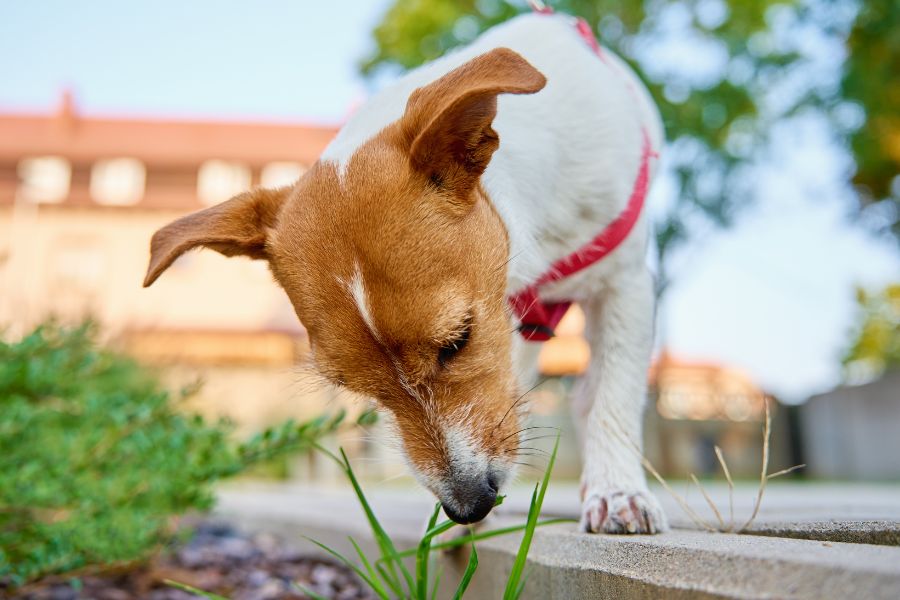
If you’ve ever caught your pup munching on the lawn and wondered, Why does my dog eat grass?, you’re not alone. Grass-eating is one of the most common questions veterinarians hear from dog owners.
In this guide, we’ll break down the 7 surprising reasons dogs eat grass, when it’s normal behavior, and when it may signal a health concern. This article will help you understand what’s normal and when it’s time to schedule a checkup.
Why Does My Dog Eat Grass?
Most dogs eat grass occasionally, and in many cases, it’s completely normal. Some do it out of curiosity, boredom, or instinct. Others may be trying to soothe mild stomach discomfort.
However, frequent grass eating, combined with vomiting, diarrhea, or changes in appetite, may indicate digestive issues, parasites, or nutritional deficiencies.
Let’s take a closer look at the real reasons behind this behavior.
1. It’s a Natural Instinct
Dogs are descendants of wolves, and wild canines often consume plant material along with prey.
Even though your dog enjoys commercial pet food, that instinct to nibble vegetation hasn’t disappeared. Grass-eating can simply be part of normal canine behavior, especially if your dog appears happy and healthy otherwise.
2. Upset Stomach Relief
One of the most common concerns pet owners have is whether dogs eat grass to make themselves throw up.
Sometimes, yes, but not always.
Some dogs with mild nausea may eat grass and then vomit. The rough texture can irritate the stomach lining and trigger vomiting. However, studies show that most dogs that eat grass do not vomit afterward, meaning it’s not always about feeling sick.
3. Dietary Fiber Deficiency
Grass contains fiber, which helps regulate digestion. If a dog’s diet lacks adequate fiber, they may seek alternative sources.
Signs your dog may need dietary adjustments include:
- Irregular bowel movements
- Constipation
- Soft stools
- Excessive gas
A diet suggested by a veterinarian can help determine if your dog’s nutrition needs tweaking.
4. Boredom or Anxiety
Dogs sometimes eat grass simply because they’re bored.
If your dog spends long periods alone in the yard, grass-eating may become a habit. Similarly, anxious dogs may develop repetitive behaviors, including chewing grass.
Common boredom signs include:
- Digging
- Excessive barking
- Chewing non-food items
- Pacing
Increasing exercise and mental stimulation often reduces the behavior.
5. They Like the Taste or Texture
It may sound strange, but some dogs genuinely enjoy the taste or texture of grass — especially fresh spring growth.
In well-maintained lawns, young grass can be tender and appealing to dogs.
If your dog only eats grass occasionally and shows no other symptoms, it may simply be a preference.
6. Parasites or Digestive Issues
Frequent grass eating paired with symptoms like:
- Weight loss
- Lethargy
- Chronic diarrhea
- Scooting
could indicate intestinal parasites or gastrointestinal issues.
Conditions like roundworms or mild inflammatory bowel disease can trigger unusual eating habits. A simple fecal test can often identify the problem quickly.
7. Underlying Medical Conditions
Less commonly, persistent grass eating may be linked to:
- Acid reflux
- Pancreatitis
- Food allergies
- Chronic gastrointestinal disease
If your dog suddenly increases grass consumption or seems uncomfortable, it’s important not to ignore it.
When Should You Worry About Grass Eating?
Most grass-eating is harmless. But call your vet if your dog:
- Vomits repeatedly
- Has diarrhea lasting more than 24 hours
- Stops eating regular food
- Seems lethargic
- Eats chemically treated grass
Many lawns are treated with fertilizers and weed control products. These chemicals can be harmful if ingested.
Is It Safe for Dogs to Eat Grass?
Grass itself isn’t usually dangerous. The real concern is what’s on the grass.
Potential Risks:
- Pesticides and herbicides
- Fertilizers
- Parasites from contaminated soil
- Sharp grass blades are causing throat irritation
If you use lawn treatments, keep your dog away until the area is fully dry and safe.
How to Stop Your Dog from Eating Grass
If the behavior is frequent or concerning, try these strategies:
- Improve Diet Quality: Ask your veterinarian about fiber-balanced diets.
- Increase Exercise: Daily walks in your nearby parks provide mental stimulation and reduce boredom.
- Provide Enrichment: Puzzle feeders and interactive toys reduce compulsive behaviors.
- Regular Wellness Exams: Routine checkups catch digestive or parasite issues early.
Common Myths About Dogs Eating Grass
Myth #1: Dogs only eat grass when they’re sick.
Not true — many healthy dogs do it occasionally.
Myth #2: Grass eating always leads to vomiting.
Most dogs do not vomit after grazing.
Myth #3: It’s dangerous every time.
Grass itself isn’t usually harmful — chemicals are the bigger concern.
Conclusion
So, why does my dog eat grass? In most cases, it’s normal behavior rooted in instinct, curiosity, or mild digestive adjustments. However, frequent or sudden grass-eating combined with other symptoms can signal a deeper issue.
If you’re a dog owner in Prairie Village and unsure whether your dog’s grass-eating is harmless or something more serious, schedule a wellness exam at Mission Road Animal Clinic. We often recommend a full diganosntic testes and possibly bloodwork if the behavior is new or accompanied by other symptoms. Book an appointment with our vet team today! Early evaluation provides peace of mind and keeps your dog healthy and comfortable.
FAQs
Q1: Why does my dog eat grass and then throw up?
Ans: Some dogs eat grass when they feel mild nausea, and the rough texture can trigger vomiting. Occasional vomiting isn’t usually serious, but repeated episodes need veterinary attention.
Q2: Is it bad if my dog eats grass every day?
Ans: Daily grass-eating may indicate boredom, dietary imbalance, or digestive discomfort. If it’s persistent, a checkup is recommended.
Q3: Can grass cause a blockage in dogs?
Ans: Rarely, large amounts of long grass can clump and cause digestive irritation or obstruction. Monitor your dog if they consume large quantities.
Q4: Do puppies eat grass more than adult dogs?
Ans: Puppies often explore with their mouths and may nibble grass out of curiosity. Most outgrow excessive grazing.
Q5: Should I stop my dog from eating grass?
Ans: If your dog is healthy and the grass is chemical-free, occasional grazing is usually harmless. If symptoms appear, consult your veterinarian promptly.